


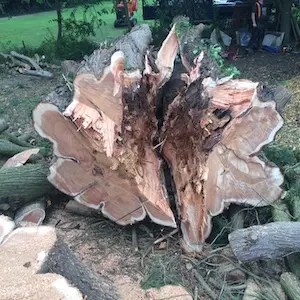
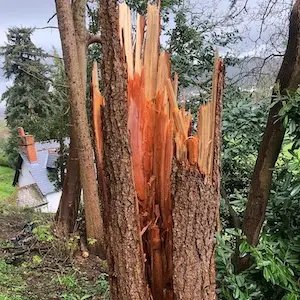


Silva Tree Surgeons were recently asked to provide a quotation for the removal of a mature Horse Chestnut tree at a local school near Taunton. The school had previously been advised by another contractor that the tree was extremely dangerous and should be felled.

Thorough Inspection and Decay Testing
On our initial site visit, it was clear that while the tree required remedial work, immediate removal might not be necessary. We recommended a more detailed assessment, and our client agreed to an in-depth inspection, including a resistograph decay test carried out by Colin from Arboricare. Our team also carried out a full climb and visual inspection of the tree.
The resistograph test involves inserting a fine drill into the wood to measure resistance. Areas of sound wood provide strong resistance, while decayed or hollow sections show weaker resistance. This allows us to map the internal structure of the tree and understand the extent of any decay without causing significant damage.

Retention Through Crown Reduction
Happily, the results showed the Horse Chestnut had less decay than initially thought. Instead of removing the tree, we carried out a major crown reduction to reduce weight and stress on the main limbs. With ongoing monitoring and regular inspections, the tree can now remain in place, continuing to provide shade and character to the school grounds for many years.
This case study highlights our commitment to tree preservation across Somerset. At Silva Tree Surgeons, we are not about felling trees unnecessarily. Instead, we provide honest, evidence-based advice to ensure the safety of people and property while retaining healthy trees wherever possible.